
Latina and Bella seating systems
Design, engineering: Graziella Bianchi e Renzo Fauciglietti
Production: FRAG
Year: 2003
CONTEXT
FRAG is a company with deep expertise in leather processing, developed over two generations, and a strong international focus.
At the beginning of the 2000s, the company felt the need to develop new seating collections capable of combining comfort, technical innovation, and formal identity, while strengthening the brand’s identity.

PROBLEM
Leather is a complex material:
- difficult to make comfortable for prolonged use
- challenging to manage in production
The challenge was to overcome the traditional limitations of the material without compromising craftsmanship quality or increasing industrial complexity.

APPROACH
The project was born from the combination of:
- FRAG’s production know-how
- our experience in designing leather seating
- ongoing research at our R&D center on new flexible internal structures
The work was carried out through:
- technical experimentation on the structure
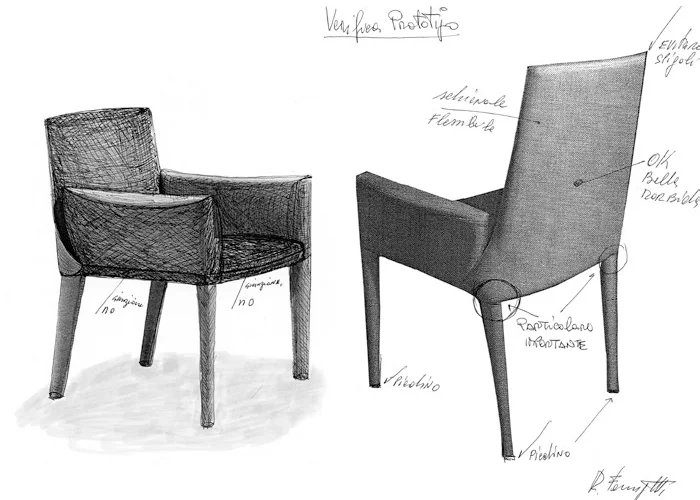
- advanced prototyping (as a central design tool)
- continuous dialogue with the company to address production and aesthetic challenges
SOLUTION
A new concept of leather seating was developed, capable of:
- providing comfort even for prolonged use
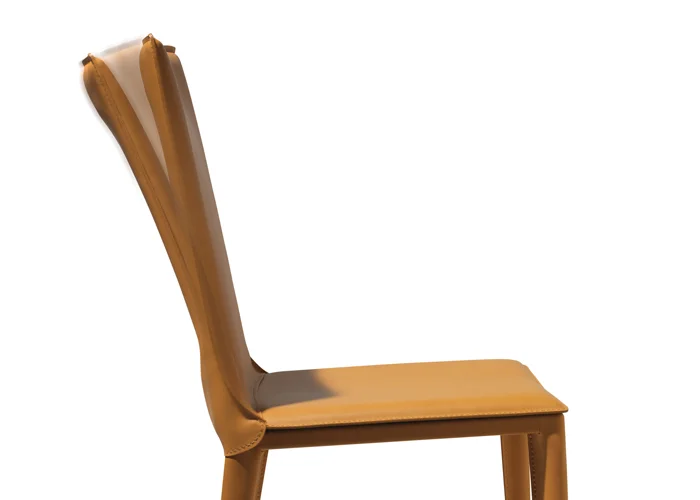
- allowing flexibility in the backrest
- maintaining an essential aesthetic consistent with FRAG’s identity
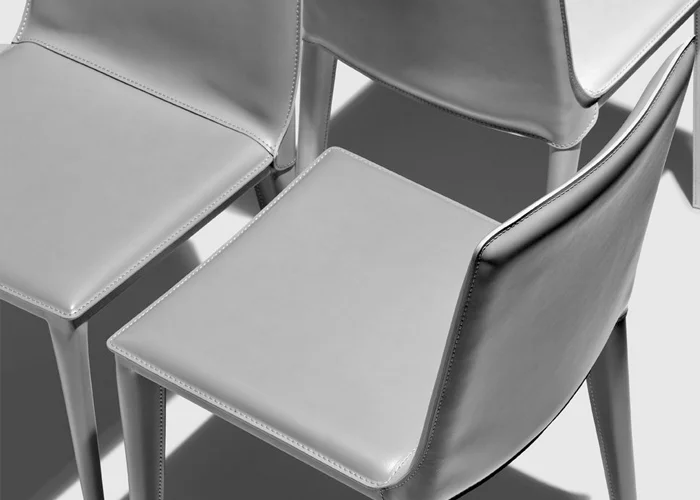
The first project, Latina, became the foundation for the development of a product system, from which the Bella family later emerged — collections that are still in production today.

RESULTS
- Rapid industrialization and market launch
- Consistent presence in major international showrooms
- Recognition for ergonomic and design quality
- Longevity of the products in the collection (over twenty years)
A notable episode: during a presentation in the United States, Mario Bellini praised the comfort of the Latina seat, acknowledging its design value.
It was also featured as an editorial in the Wall Street Journal as an innovative product.
PROJECT VALUE
The FRAG case demonstrates how an approach that integrates design, engineering, and method can:
- transform artisanal expertise into an industrial system
- generate long-lasting products
- support the company’s international positioning
- increase business profitability